Firekeepers are trusted stewards who help co-hold the ethical, relational, and emotional field of our inquiry process. Their role is attentional and relational: they help tend the ‘fire’ of shared purpose, collective care, and respectful dialogue. Firekeepers listen deeply, speak authentically, and stay connected to our shared core values of kinship, dignity, and interdependence, including with the more-than-human.
Firekeeping as a Way of Being
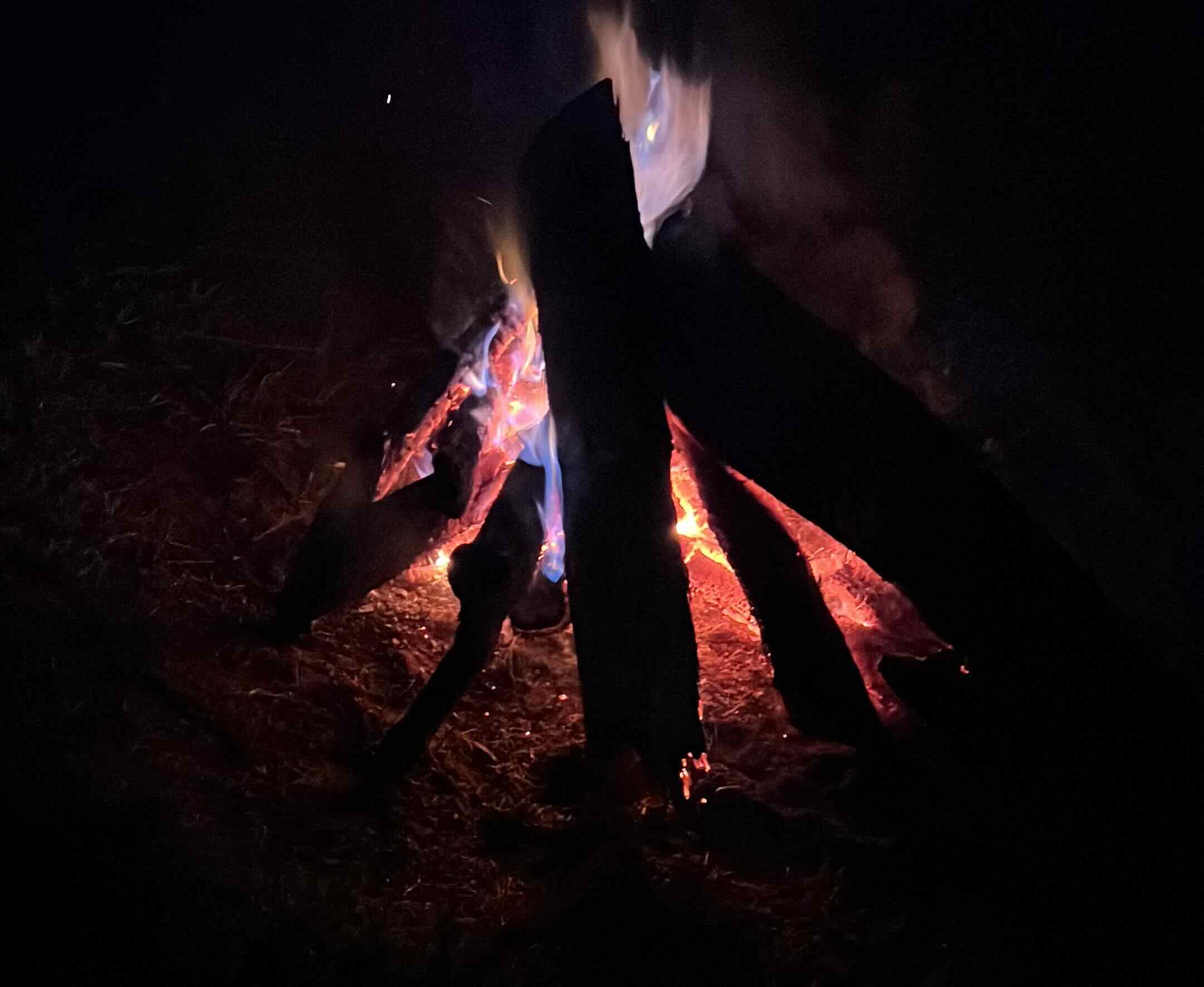
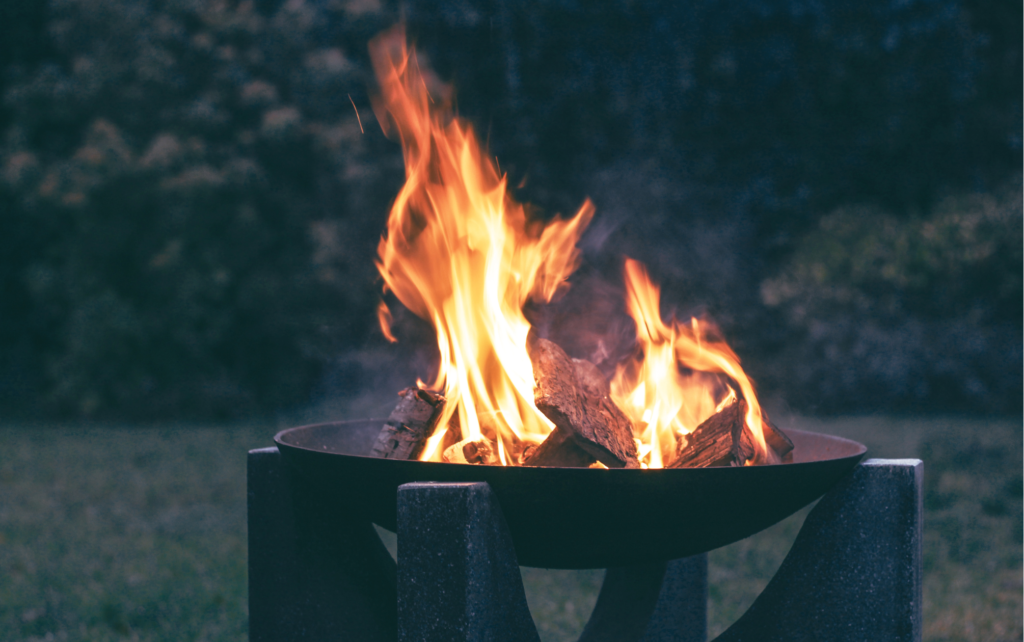
At the World Ethic Forum, we often speak of Firekeeping. What do we mean by it? For us, firekeeping refers to a way of being, a deep and sincere commitment to tending to life, weaving kinship, and keeping alive the flame of collective inquiry into how we might live in radical aliveness and care.
To be a Firekeeper is to embrace our interrelatedness and tend to our relationships: with humans and more-than-humans, with land and place, with the subtle and ourselves. Firekeeping is about listening deeply, holding space, and nurturing a culture of care that rests in oneness.
It asks for presence: physical, emotional, mental and energetic. Firekeepers are called to bring their full selves into the circle: including their vulnerability, their questions, and their willingness to be transformed.
The Firekeeper Circle
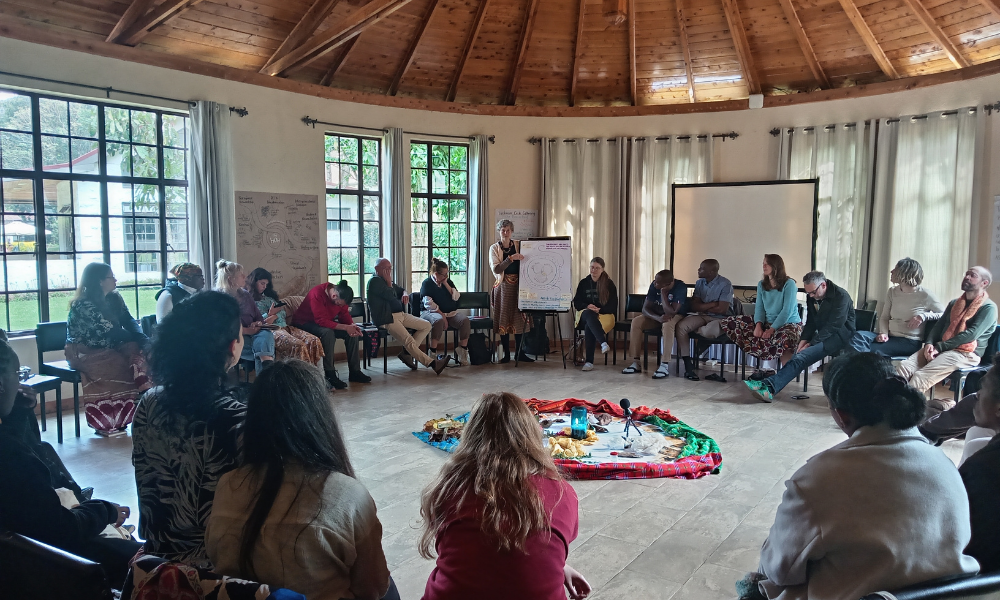
The Firekeeper Circle is the living body where this practice unfolds. It is a carefully tended space, stable enough to build deep trust and continuity, yet porous enough to welcome new voices and perspectives.
Firekeepers come from diverse backgrounds and places. They are community organisers, artists, activists, researchers, elders, and youth. What unites them is not a single profession but a shared inquiry:
How can radically shared aliveness, grounded in a culture of care and kinship, be enabled and put into practice across sectors, places, and disciplines?
Qualities of a Firekeeper include:
- experience in eco-social transformation and community practice
- commitment and presence in gatherings and working groups
- a reflective, relational approach rooted in kinship and care
- deep resonance with the shared inquiry into radically shared aliveness
- a contribution to the circle’s diversity — geographically, culturally, generationally, or otherwise
- capacity for co-holding complexity with care and courage
- willingness to accompany others and be accompanied in return.
Beyond the Circle
Firekeeping is not done in isolation. Firekeepers are encouraged to bring questions into their local contexts, to listen with their communities, and to return with stories and insights. In this way, Firekeeping creates a living feedback loop between the Forum and the wider world.
There are also roles beyond Firekeepers, such as Witnesses, who mirror back what they perceive, or volunteers who are there in full service to the community. This layered approach allows the field to grow organically without assuming that everyone must contribute in the same way at all times.
Why Firekeeping Matters
To be a Firekeeper is to keep tending the flame of inquiry, year after year, so that wisdom does not flicker out but grows brighter, lighting pathways of kinship and care for our times.
Origins of Firekeeping
Firekeeping, as we practice it, echoes ancient human traditions and rituals in which tending to the flame is a continuous act of presence, care, and guardianship for the living field of community and the cosmos. In a variety of indigenous cultures, the fire is seen as a teacher and the firekeeper as a sacred steward, ensuring care, presence, and connection across land, ancestors, community, and the more-than-human. Firekeeping is therefore a vow of eye-level stewardship.
Among the Haudenosaunee (Iroquois), Faithkeepers tend to the central council fire as the living embodiment of the Great Law of Peace – a flame continuously guarded to hold alliances, stories, and intergenerational wisdom. Anishinaabe Mishomis (grandmothers) and fire lodge keepers maintain sacred fires during ceremonies, feeding them wood and prayer to nurture spiritual kinship with all relations. In Karuk traditions, firekeepers ceremonially tend to ‘prayer fires’ at world renewal dances, balancing human vulnerability with the flame’s transformative power. Among the Maori, the tohunga ahu kai (fire priests) guard the sacred fire of whakawhanaungatanga, weaving community through its warmth and light.
Further examples are to be found in Zoroastrianism, where priests as fire-tenders (atash behram) hold eternal flames as bridges to divine order, listening deeply to fire’s wisdom while sustaining its light through unwavering attention. The Vedic Agni-hotris invoke Agni as the hearth’s living kin, carrying prayers between worlds through rituals of reciprocity and shared breath. In Shingon Buddhism’s goma, firekeepers rhythmically offer wood and mantra, co-holding a transformative space where ego burns away, revealing oneness. In Alchemy, fire is understood as ‘doing the work’. Fire is the process, fire is the medium, and fire finds the gold. While the alchemist tends to it, they allow their own transformation as part of the unfolding alchemising process.
The West itself never lost this art entirely, from Roman hearth cults to medieval European fire-watching guilds, though industrialised disconnection dimmed it. In Switzerland, the place of origin of the World Ethic Forum, there are numerous different firekeeping traditions which are still actively practised. Those include Alpine Herdwart (hearth wardens) in Walser Rauchküche, continuously feeding embers overnight to protect households and herds from winter spirits, but also Chienbäse broom-bearers tending resin torches through spring processions that embody seasonal renewal (most famously in Liestal), and Höhenfeuer fire-watchers sustaining hilltop flames on peaks, signalling kinship across valleys on Swiss National Day.
These few examples are just a small sample of the depths and width of the richness we can find across times, cultures, places and practices. We celebrate and acknowledge the diverse yet aligned intentions that weave these practices, traditions, rituals and sacred manners into a rich tapestry.
These traditions all mirror Firekeeping’s essence: full embodied presence while tending to the flame’s relational field – a mutual tending, not control. Fire demands authentic listening and balance.
At the World Ethic Forum, Firekeeping rekindles this ancestral art for contemporary circles. Firekeepers co-hold the ethical-relational field –listening deeply, nurturing collective care, and sustaining the flame of shared purpose, kinship, and radical aliveness across beings and boundaries.
Related Posts
-

Looking Back to the 2026 Firekeeper Gathering
In 2026, the World Ethic Forum gathered on the African continent for the first time. With the support of our partner organisation Nile Journeys, we were hosted in Kenya. For everyone, this shift in place marked a change in the quality of our connection.
-

Changing Paradigms Without Losing the World
How do you change a paradigm without losing the world? Change it alone and you risk isolation. In a small group, cultishness. For everyone, no one has that power. This post proposes another path, drawing on ecology: nurture the ecotone, where systems meet, and something new becomes possible.
-

In times of darkness, we will shine
In times of darkness, I seek light. Because the dark heaviness of genocide, destruction and oppression lies on my soul. Because the screams of mothers, fathers, and children never stop. A poem by Firekeeper Alexandra Gavilano