Thematic Strands

Our priorities for the coming years.

Since the first gathering of the Firekeeper circle in 2022, our exploration of radically shared aliveness crystallised into seven Thematic Strands. Those themes emerged from interactions and tensions at play within the group, reflecting systemic fault-lines in the microcosm formed by the Firekeeper circle. Importantly, we see and approach them as highly intertwined and interrelated, yet each is distinct and offers a unique angle on today’s perplexing challenges.

The World Ethic Forum sees these seven Thematic Strands as critical areas of attention. They reflect key elements to work through in our process of inquiry, both as issues to address and as possible anchor points – if transformed – for future pathways towards a culture of radically shared aliveness. Each strand offers an entry point to the core practices and capacities that we’re inquiring into. Each also calls for specific practices and capacities to be co-created through the combination of diverse perspectives.

Between annual gatherings, the Thematic Strands serve as focal points for different working groups of Firekeepers. They also inform our Participatory Action Research process. By focusing attention on distinct areas of inquiry, Thematic Strands give greater concreteness to the World Ethic Forum’s exploration of radically shared aliveness, while aligning our work with existing fields of research, and suggesting potential leverage points for future action.

Illustrations: Odelia Toder

Ethical Ground Work
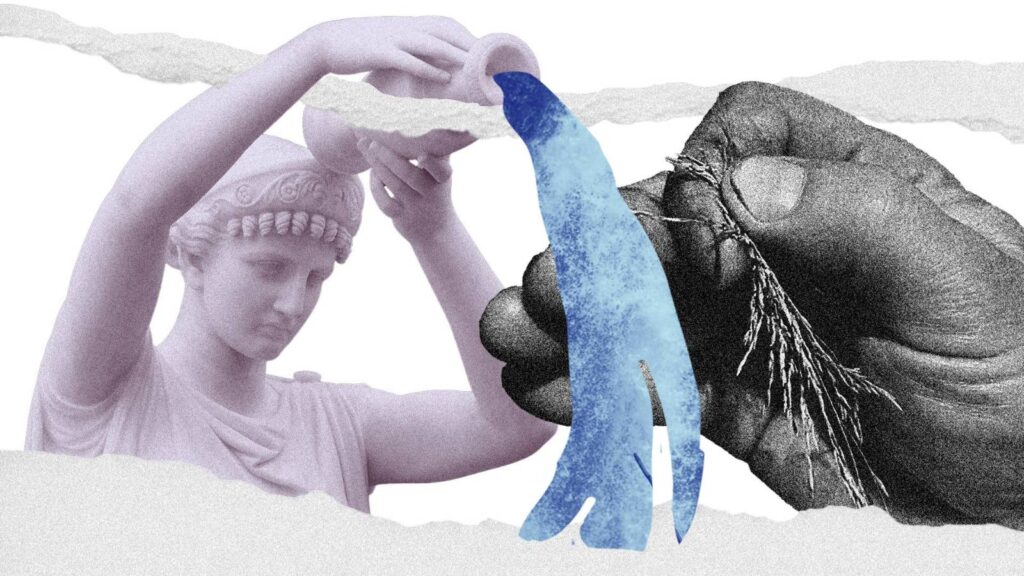
What do we mean by an ethic grounded in radically shared aliveness? Who defines it, and through what lenses? Can we see it as a set of diverse perspectives, informed by diverse cultures and traditions? Instead of unifying and generalising, can we celebrate the unique nuances of each as part of a larger whole we could name values or an ethical approach? We explore the critical questions, possible perspectives and required competencies that would help shape an ethic or a set of values enabling radically shared aliveness. We then adapt and translate those questions, perspectives and competencies to diverse contexts and scales.

Decolonisation – Equity – Diversity – Inclusion

Who is at the table, who is not, and how do power and rank work within us? We gesture towards a future that transcends colonial patterns and integrates an inclusive, equitable, and diverse society. We do this in part by sharpening our common understanding of these terms as well as the histories that informed them and still give shape to perpetuating inequalities. From there, informed by our wider ways of knowing, we explore the associated practices that support us in actively shifting them inside out, individually and collectively.

Healing – Restoration – Reconciliation
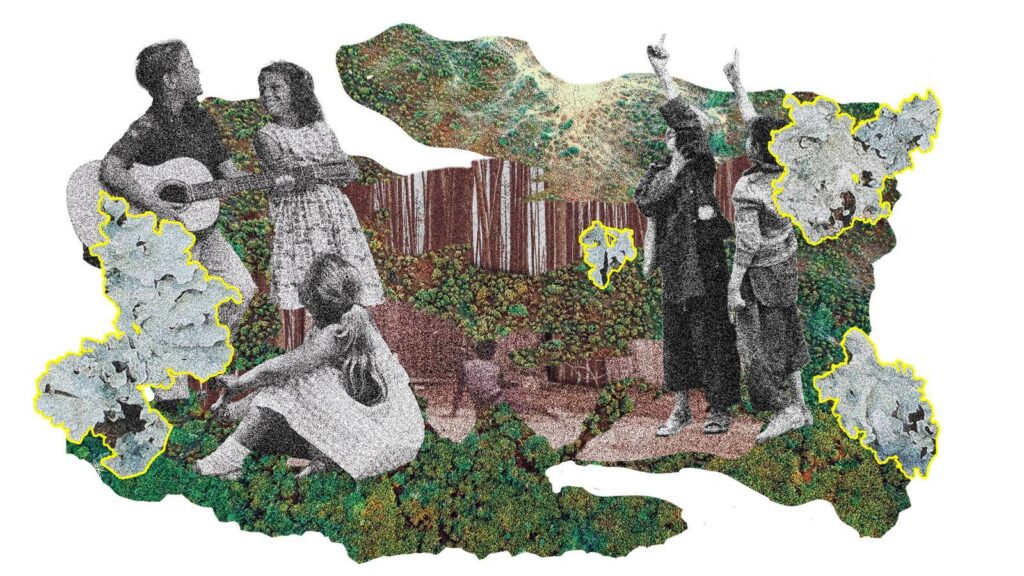
How to engage with the pain, deep scars, vulnerabilities, and calls for profound realignment that result from century-old ingrained injustices and their repercussions into today? We aim to explore, experiment with, articulate and share processes that can practically and concretely enable healing, reconciling, or repairing fractured relational fabrics in the personal and the collective. We also recognise that meeting and working with shadows and lingering tensions is an intrinsic part of building radically shared aliveness: so, we must anticipate or even call upon them, with the associated pain, grief, shame and guilt, and ensure that space is made for them as part of any (re)weaving effort.

Kinship – Relating to all Beings

How might we ‘kin’ with other beings, and what do the various traditions we come from have to teach us about it? We engage in a world filled with relationships, allowing for awe, mutuality and reciprocity, and root ourselves in a relational ontology stemming from different cosmologies, where all forms of beings – including watersheds, forests, mountains, animals, air, people and so many other expressions of life – are acknowledged and respected equally. We adapt our actions and ways of being accordingly, including by creating hands-on, practical translations into our current systems. We are in an inquiry regarding collective kinship practices and capacities, and we are interested in and open to connecting with other organizations.

Responsible Economy – New forms of Economy

What are the blockages to radically shared aliveness that stem from our current economic, business and financial systems, and what can we do about them? What alternative models are already out there, and what critical underlying values would allow us to assess them as future-fit, rooted in ecocentric worldviews, and resonant with the needs articulated in our other Thematic Strands? What viable models could be brought together, at various scales, even if only to stimulate a sense of what is possible? This strand is particularly interested in converging on what can be made tangible in our material systems, moving toward a culture of care and kinship.

Stewardship of Bioregions – Agriculture and Food

How do we shift our understanding and stewardship of the land from the construct of the nation state to a more organic bioregional approach? How do we shift our relationship to the land from one of ownership and extraction to one of care and custody? We take into account that political, cultural, and economic systems are more sustainable and just if they are organized around naturally defined areas (i.e., flora, fauna, landforms, climate, and watersheds) and work towards a world in which borders are set according to ecological and cultural ‘permeable boundaries’. We also look to meet our responsibility to bring elements from the other strands – in particular, a sense of kinship with other living beings – to our stewardship of the land.

Youth, Children, Elders, Parents – Intergenerational Learning and Dialogue
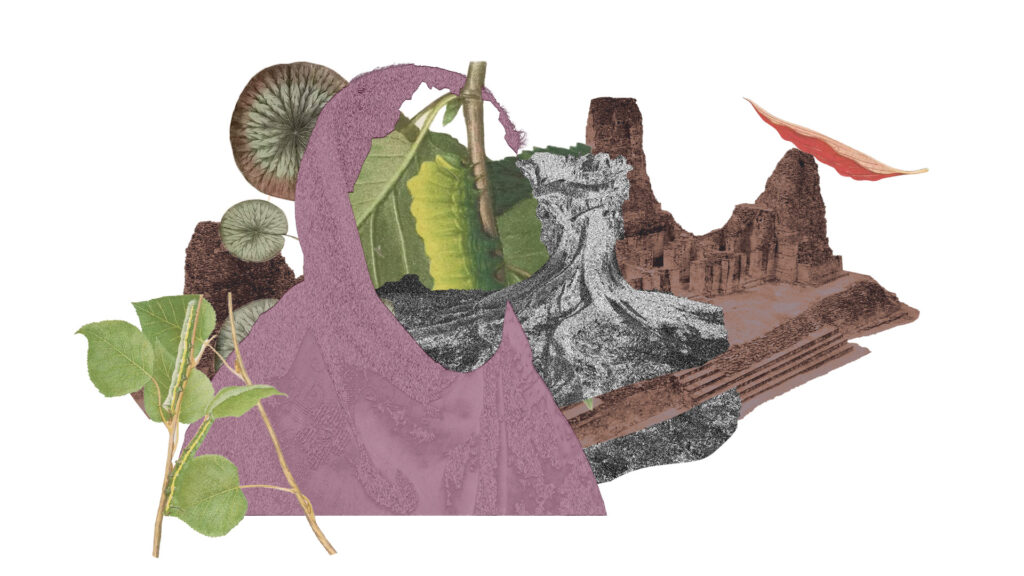
What can we leave behind as elders, and how might young people best engage in radically shared aliveness and inspire us with their views on the world? We aim to lean into regenerative attitudes while learning through passing knowledge up and down the different age groups to strengthen the relationships important in any healthy social systems: an integral place given to all the different generations and recognition of their respective responsibilities. For this, we wish to bring together the voices and wisdom of different generations and sit with the big(ger) questions of our times, inspired by a 7-generations principle, and seeing ourselves as future ancestors in becoming.