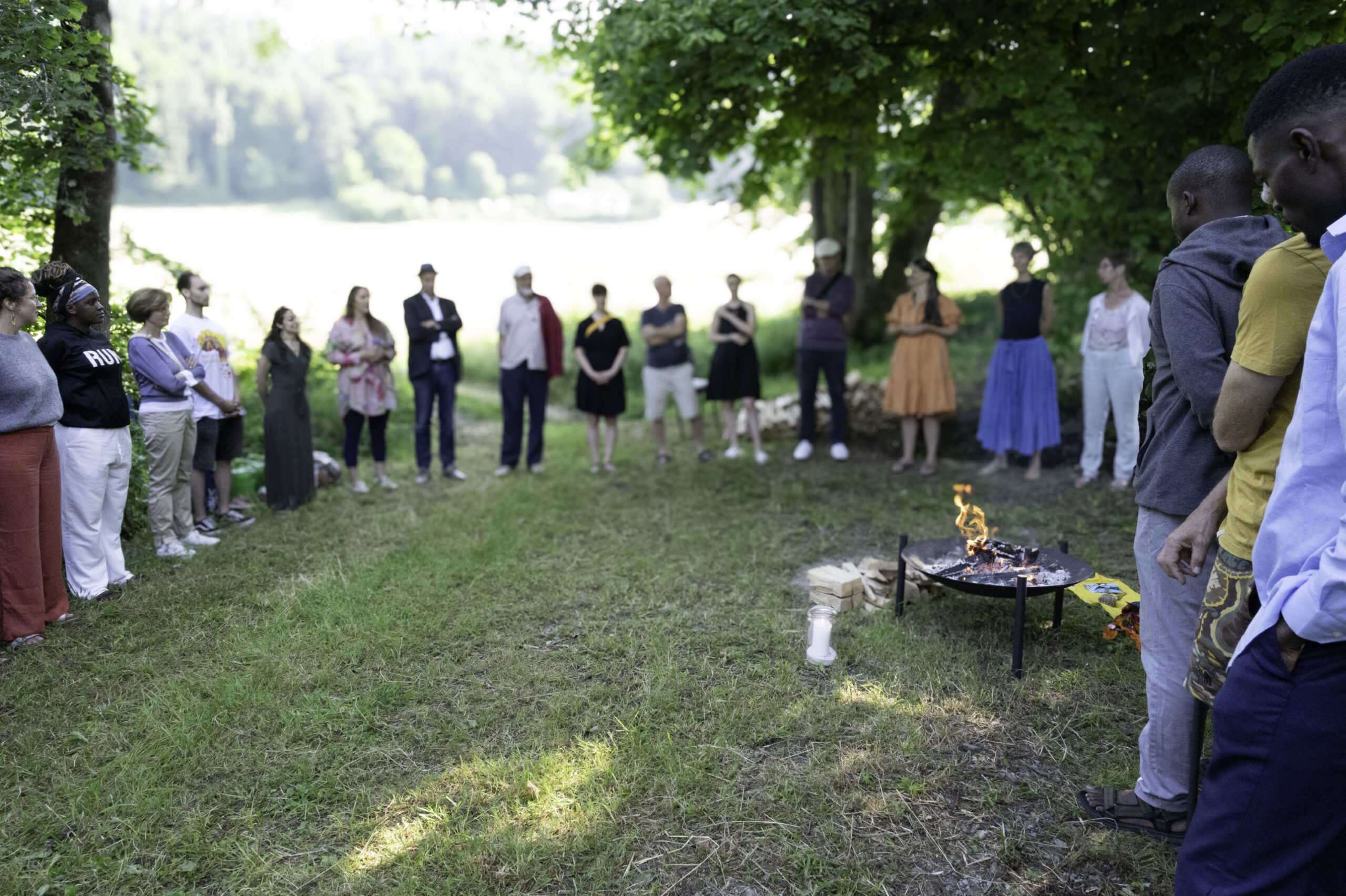
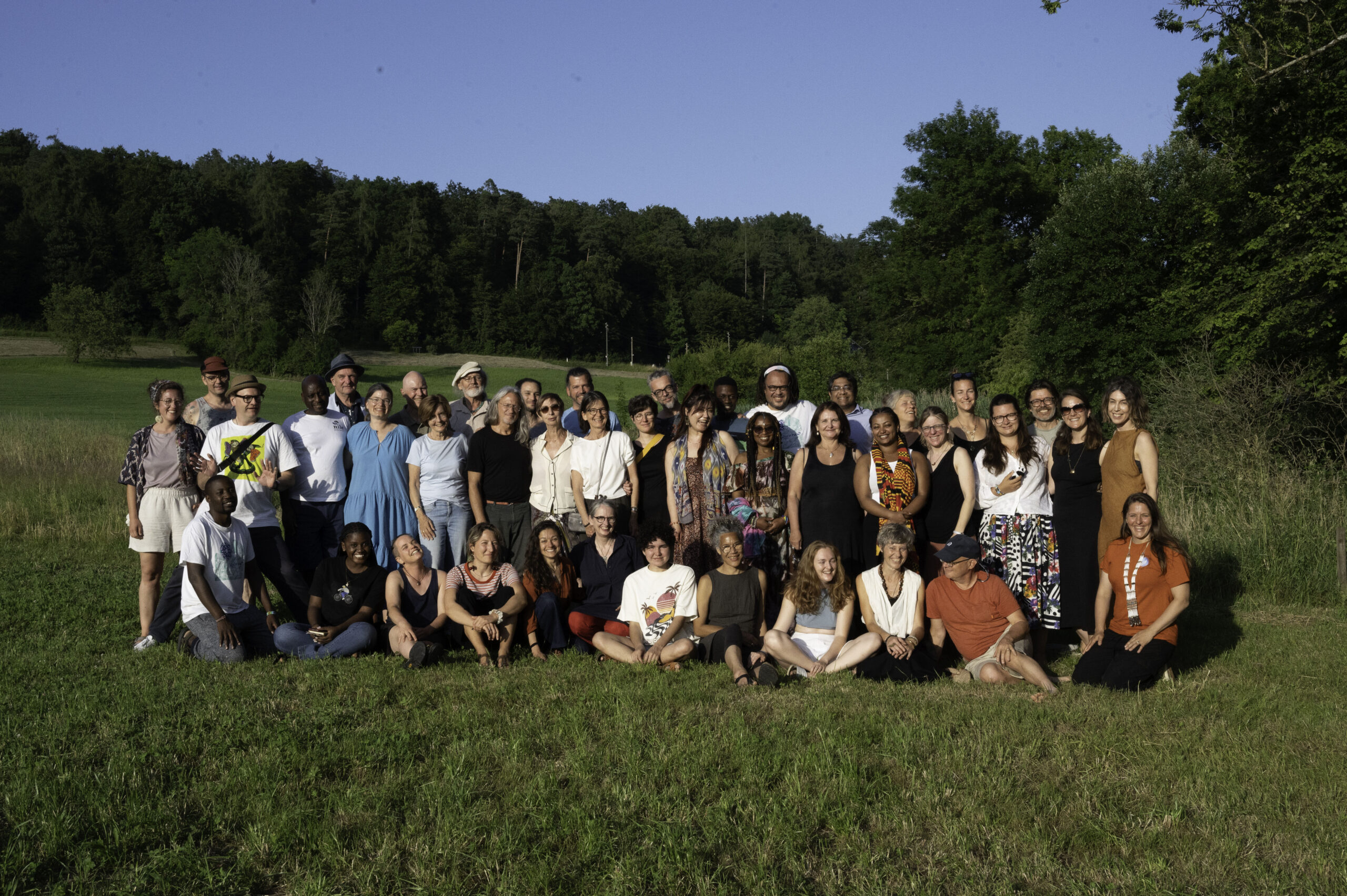
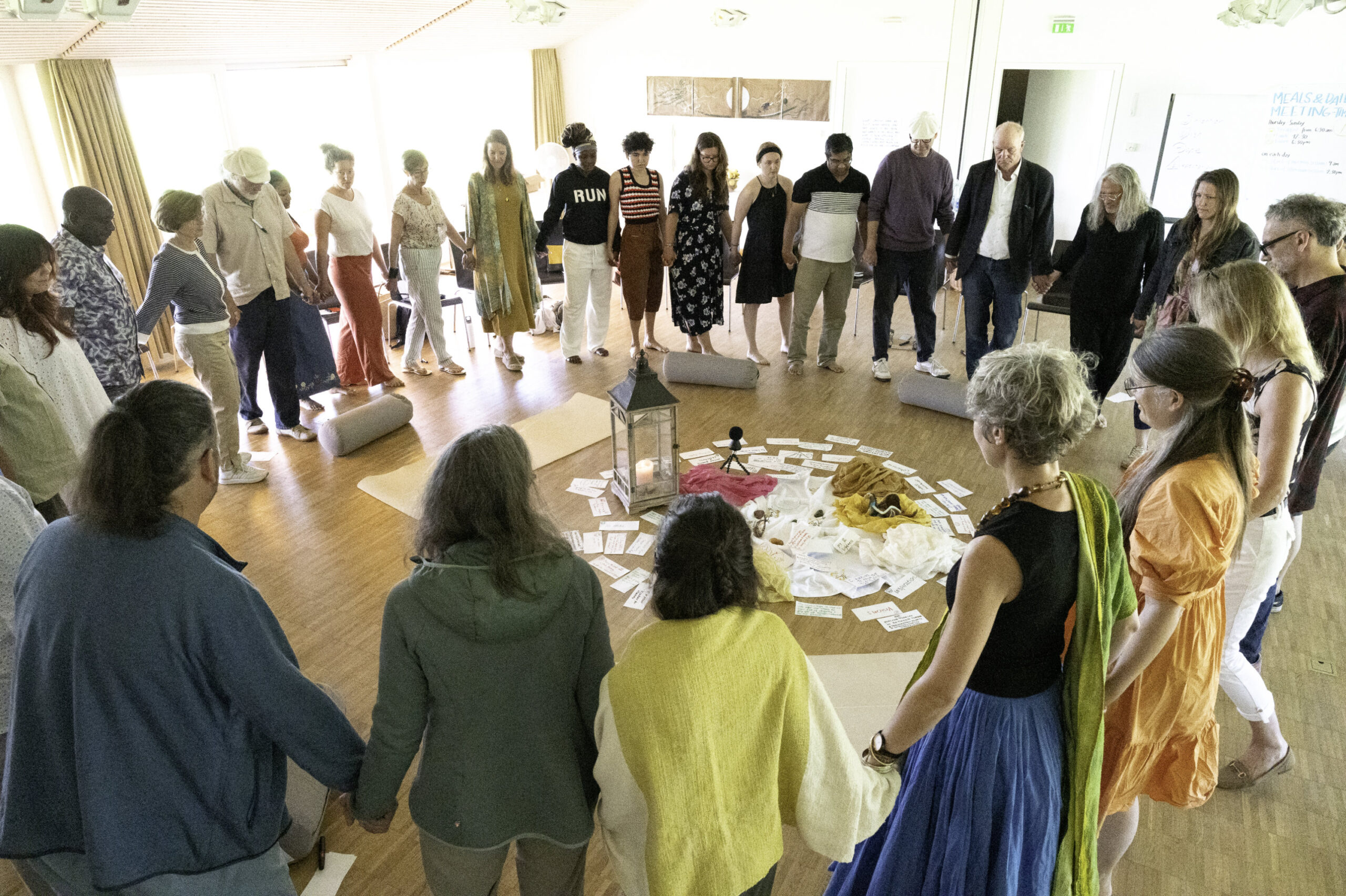
The Firekeeper Circle is a network of diverse thought and action leaders from across the world. Firekeepers include regenerative farmers, community builders, researchers, artists, activists, practitioners, and engaged citizens representing different organisations, initiatives, networks and institutions committed to societal transformation towards a culture of care and kinship. All are intimately connected to the land and the more-than-human. They have been invited on the basis of their ongoing effort to embed radically shared aliveness in their organisations, communities, or other systems guided by their stewardship.
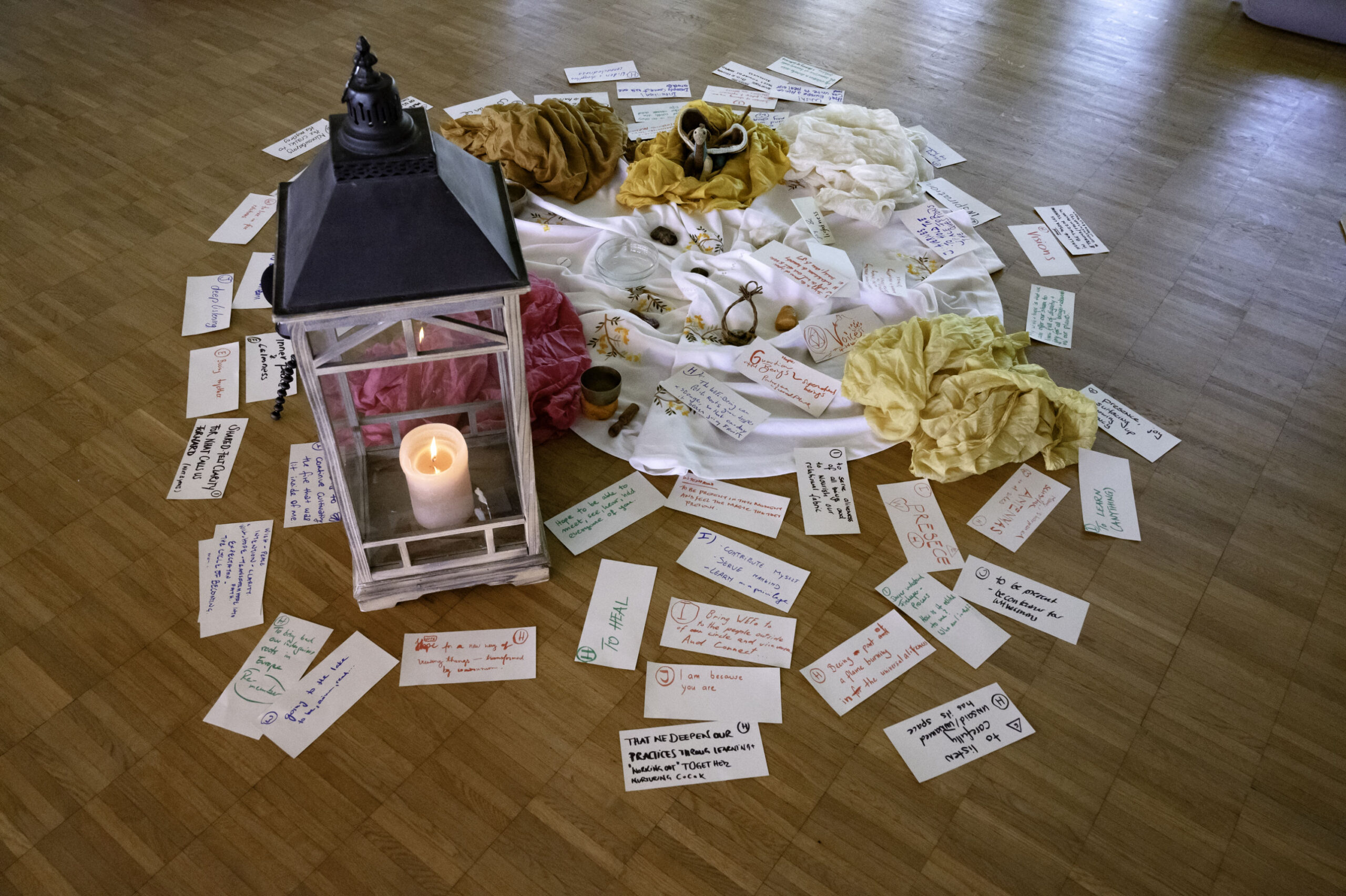
Once a year, we meet in person in a physical circle. During the rest of the year, we gather online and in various working groups aligned with our Thematic Strands. Together, we co-hold space through deep listening, inquiry, co-creation, as well as energetic co-stewarding and connection with the more-than-human. This process allows us to go through an experience of deep transformative movements as a collective body, finding shared and fertile ground in the midst of complexity, messiness and a diversity of perspectives. Insights and knowledge from this experience are tracked, documented and shared through our Participatory Action Research process.
Firekeepers are encouraged to bring questions to their local networks and return with insights, stories, and responses to share with the wider circle. This creates a field of deep presence, listening, and embodied relationality across geographies and contexts, and ensures that a wider range of perspectives are ongoingly woven in and integrated.
Over our initial seven-year arc, we intend for the Firekeeper circle to remain relatively stable as a curated group of around 40-60 members. This is a way to foster trust and deepen relationships among all members.
Firekeeping is more than a role. It is a way of tending to, honouring and enhancing life, by (re)weaving relationships between humans and more-than-humans, as a way to give shape to a culture of radically shared aliveness. Firekeeping inquires into the subtle, invisible or hidden aspects of our shared humanity that call for transformative shifts. We delve into what else is possible when we come together across disciplines, perspectives, scales, sectors and cultures. By learning from and with each other, we weave our rich diversity into a more coherent whole, finding shared and fertile ground for nurturing aliveness amid systemic challenges. More than an intellectual exercise, this is a commitment to personal and collective evolution.